Pagina's

Water Specialist

zondag 27 mei 2012

20 Facts About Water


20 Interesting and Useful Water Facts


  1. Roughly 70 percent of an adult’s body is made up of water.
  2. At birth, water accounts for approximately 80 percent of an infant’s body weight.
  3. A healthy person can drink about three gallons (48 cups) of water per day.
  4. Drinking too much water too quickly can lead to water intoxication. Water intoxication occurs when water dilutes the sodium level in the bloodstream and causes an imbalance of water in the brain.
  5. Water intoxication is most likely to occur during periods of intense athletic performance.
  6. While the daily recommended amount of water is eight cups per day, not all of this water must be consumed in the liquid form. Nearly every food or drink item provides some water to the body.
  7. Soft drinks, coffee, and tea, while made up almost entirely of water, also contain caffeine. Caffeine can act as a mild diuretic, preventing water from traveling to necessary locations in the body.
  8. Pure water (solely hydrogen and oxygen atoms) has a neutral pH of 7, which is neither acidic nor basic.
  9. Water dissolves more substances than any other liquid. Wherever it travels, water carries chemicals, minerals, and nutrients with it.
  10. Somewhere between 70 and 75 percent of the earth’s surface is covered with water.
  11. Much more fresh water is stored under the ground in aquifers than on the earth’s surface.
  12. The earth is a closed system, similar to a terrarium, meaning that it rarely loses or gains extra matter. The same water that existed on the earth millions of years ago is still present today.
  13. The total amount of water on the earth is about 326 million cubic miles of water.
  14. Of all the water on the earth, humans can used only about three tenths of a percent of this water. Such usable water is found in groundwater aquifers, rivers, and freshwater lakes.
  15. The United States uses about 346,000 million gallons of fresh water every day.
  16. The United States uses nearly 80 percent of its water for irrigation and thermoelectric power.
  17. The average person in the United States uses anywhere from 80-100 gallons of water per day. Flushing the toilet actually takes up the largest amount of this water.
  18. Approximately 85 percent of U.S. residents receive their water from public water facilities. The remaining 15 percent supply their own water from private wells or other sources.
  19. By the time a person feels thirsty, his or her body has lost over 1 percent of its total water amount.
  20. The weight a person loses directly after intense physical activity is weight from water, not fat.

vrijdag 11 mei 2012

20 Things You Didn't Know About... Water


20 Things You Didn't Know About... Water 


1  Water is everywhere—there are 332,500,000 cubic miles of it on the earth’s surface. But less than 1 percent of it is fresh and accessible, even when you include bottled water.


2  And “fresh” can be a relative term. Before 2009, federal regulators did not require water bottlers to remove E. coli.


3  Actually, E. coli doesn’t sound so bad. In 1999 the Natural Resources Defense Council found that one brand of spring water came from a well in an industrial parking lot near a hazardous waste dump.


---------------add/reclame ---------------
 ---------------add/reclame ---------------


4  Cheers! The new Water Recovery System on the International Space Station recycles 93 percent of astronauts’ perspiration and urine, turning it back into drinking water.


5  Kurdish villages in northern Iraq are using a portable version of the NASA system to purify water from streams and rivers, courtesy of the relief group Concern for Kids.


6  Ice is a lattice of tetrahedrally bonded molecules that contain a lot of empty space. That’s why it floats.


7  Even after ice melts, some of those tetrahedrons almost always remain, like tiny ice cubes 100 molecules wide. So every glass of water, no matter what its temperature, comes on the rocks.


8  You can make your own water by mixing hydrogen and oxygen in a container and adding a spark. Unfortunately, that is the formula that helped destroy the Hindenburg.


9  Scientists have a less explosive recipe for extracting energy from hydrogen and oxygen. Strip away electrons from some hydrogen molecules, add oxygen molecules with too many electrons, and bingo! You get an electric current. That’s what happens in a fuel cell.


10  Good gardeners know not to water plants during the day. Droplets clinging to the leaves can act as little magnifying glasses, focusing sunlight and causing the plants to burn.


11  Hair on your skin can hold water droplets too. A hairy leg may get sunburned more quickly than a shaved one.


12  Vicious cycle: Water in the stratosphere contributes to the current warming of the earth’s atmosphere. That in turn may increase the severity of tropical cyclones, which throw more water into the stratosphere. That’s the theory, anyway.


13  The slower rate of warming in the past decade might be due to a 10 percent drop in stratospheric water. Cause: unknown.


14  Although many doctors tell patients to drink eight glasses of water a day, there is no scientific evidence to support this advice.


15  The misinformation might have come from a 1945 report recommending that Americans consume about “1 milliliter of water for each calorie of food,” which amounts to 8 or 10 cups a day. But the report added that much of that water comes from food—a nuance many people apparently missed.


16  Call waterholics anonymous: Drinking significantly more water than is needed can cause “water intoxication” and lead to fatal cerebral and pulmonary edema. Amateur marathon runners have died this way.


17  Scientists at Oregon State University have identified vast reservoirs of water beneath the ocean floor. In fact, there may be more water under the oceans than in them.


18  Without water, ocean crust would not sink back into the earth’s mantle. There would be no plate tectonics, and our planet would probably be a lot like Venus: hellish and inert.


19  At the other end of the wetness scale, planet GJ 1214b, which orbits a red dwarf star, may be almost entirely water.


20  Recent evidence suggests that when the solar system formed 4.5 billion years ago, comets had liquid cores. If so, life may have started in a comet.

donderdag 10 mei 2012

Water, Water, Water Crisis

780 million people lack access to an improved water source; approximately one in nine people.

3.41 million people die each year from water, sanitation and hygiene-related causes each year.

The water and sanitation crisis claims more lives through disease than any war claims through guns.


People living informal settlements (i.e. slums) often pay 5-10 times more per liter of water than wealthy people living in the same city.

An American taking a five-minute shower uses more water than the average person in a developing country slum uses for an entire day. 

woensdag 9 mei 2012

Blue Gold

Water is getting scarce. See the video and what can we do about it!
I came across this video. It is very interesting and should be watched by many more people.

Note: at the end of the video there are some shocking images for kids!!!


Award-winning featured documentary narrated by Malcolm McDowell. Global Warming is an issue of 'how' we live, the water crisis is an issue of 'if' we live. DVD at www.bluegold-worldwaterwars.com


Below some links to help you to preserve our water supplies and electricity!


Great Converting Guide For Building A Solar Water Heater. Click Here


Safe on your Energy bill and water Click Here


Meer Bewijs Over Het Waterverleden Op Mars

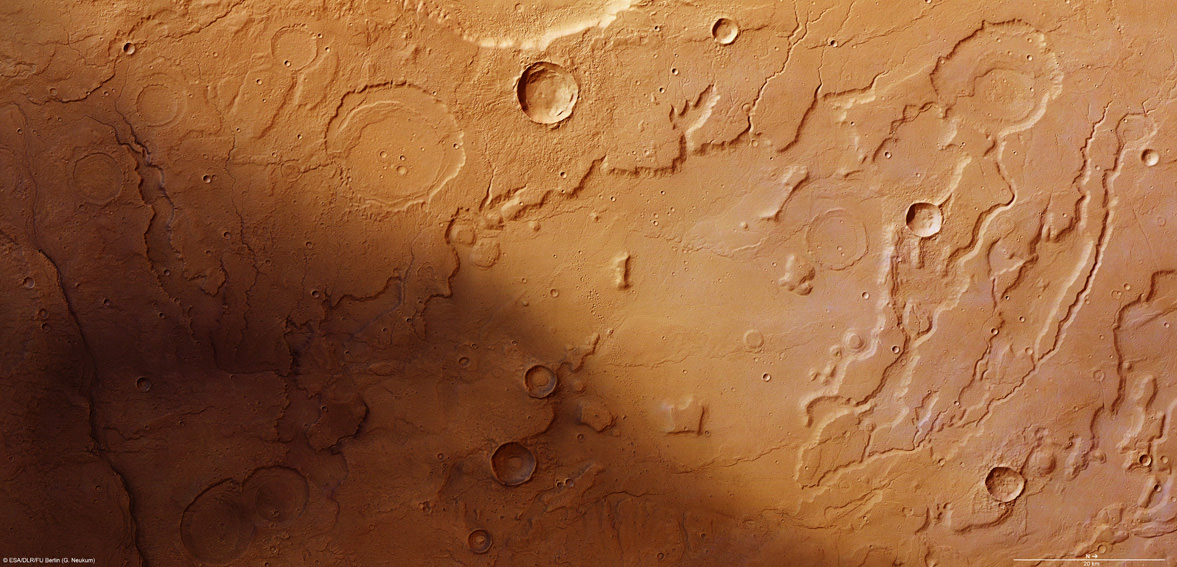
De Mars Express Orbiter van het ruimteonderzoeksbureau ESA heeft foto's gestuurd waarop terrein zichtbaar is waar water invloed gehad heeft op het oppervlak. Dit ondersteund de hypothese dat er op Mars vloeibaar water aanwezig zou zijn geweest.


The transition between Acidalia Planitia and Tempe Terra from the Mars Express High-Resolution Stereo Camera (HRSC). Credit ESA/DLR/FU Berlin (G. Neukum)

Het gebied dat hierboven op de foto  getoond wordt is een zogenaamde HRSC fotovan de grens van het Acidalia Planitia gebied. Een groot, donker oppervlak van de noordelijke halfrond van Mars, zo groot dat het vanaf aarde te zien is.

In 1877 heeft de Italiaanse astroloog Giovanni Schiaparelli dit gebied genoemd naar een mythische fontein waar de drie Genaden van de Griekse mythologie hun bad zouden hebben genomen. 
Hoewel er geen fonteinen te zien zijn op het Acidalia Planitia, zou er water geweest kunnen zijn - genoeg om de grillige beddingen en kanalen uit te slijten. Dit proces is te vergelijken met het uitslijpen van bv de Grand Canyon in de VS.
Op de HRSC foto zijn sporen te vinden van valleien die zich buiten de kraters uitstrekken, welke de indruk wekken door water gevormd te zijn welke overliepen vanuit deze kraters. Als toevoeging, sedimenten van oudere kraters tonen aan dat ze ooit gevuld waren met water.


Met zulke, heldere en duidelijke foto's van Mars, die sterk lijken op het vroegere proces hier op aarde, is het moeilijk niet te geloven dat er op Mars water aanwezig is geweest. Mogelijk zelfs nog dat er zich processen afspelen onder het oppervlak van Mars. 
Lees meer hierover op de ESA website hier.


dinsdag 8 mei 2012

Er Is Minder Water Dan Je Denkt....

Als je al het water ter wereld bij elkaar zou voegen - zoet water, zeeen, grondwater en waterdamp - en dit op een of andere wijze zou samenvoegen in een reusachtige water bol, hoe groot denk je dat deze dan is?


Volgens het  U. S. Geological Survey, zou dit een bol worden met een diameter van 1385 km. Van rand tot rand zo groot als de afstand tussen Amsterdam  tot Rome. Zo groot. Neem al het water in deze mooie blauwe bol en het is kleiner dan de maan.

Word je al een beetje dorstig?

En dit omvat al het water op aarde. zelfs het water wat door de mens niet te drinken is, of toegankelijk is, zoals zout water, waterdamp in de atmosfeer water dat opgesloten zit onder de ijskappen. 
Feitelijk als je alleen het zoetwater op aarde in beschouwing neemt ( wat maar ongeveer 2,5% van het totaal is) zou je zelfs een veel kleinere waterbol krijgen: minder dan 160 km in doorsnee. Nog niet eens de afstand tussen Groningen en Maastricht.